


Erectile Dysfunction in Young Men: Why It Happens in Your 20s and 30s
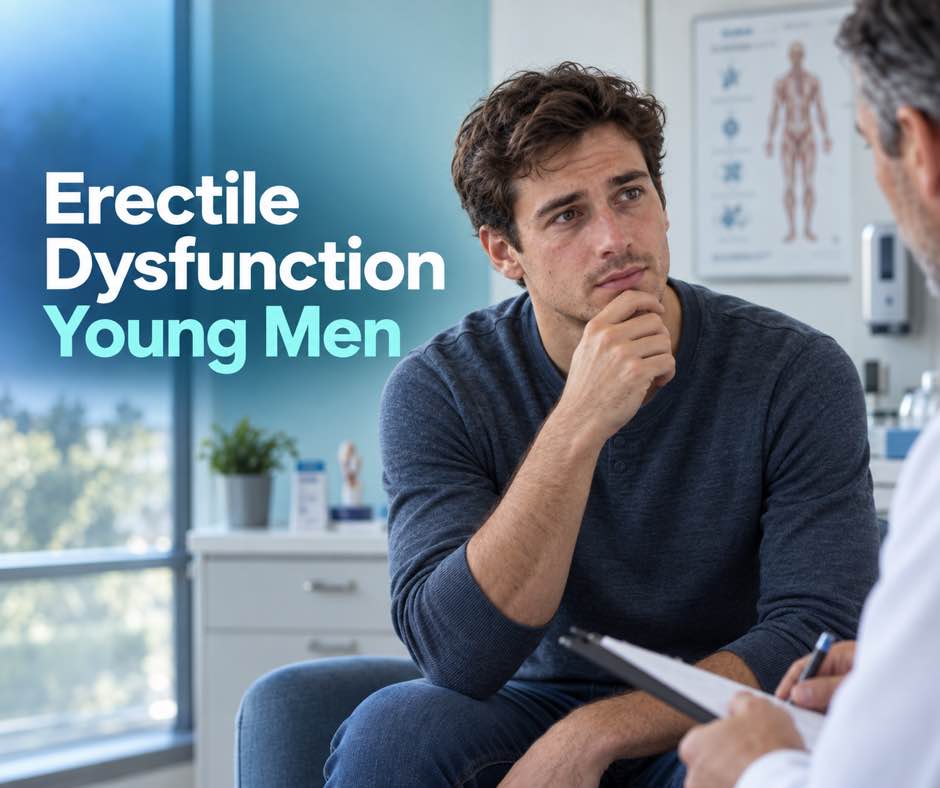
Erectile dysfunction in young men is far more common than the locker-room silence around it suggests. If you are in your 20s or 30s and things have not been working the way they used to, you are not broken, and you are definitely not the only one. Some studies of young adults report ED rates as high as 30%. It is a real thing that happens to fit, healthy guys, and most of the time there is a clear reason and a way forward.
The tricky part is that the reasons at 25 usually look nothing like the reasons at 65. This article walks through what is actually going on, when it is worth seeing a doctor, and where medicines like sildenafil and tadalafil fit in (and where they do not).
Table of Contents
How common is ED in young men, really
For a long time the assumption was that ED belonged to men over 50. That picture has changed. Reviews of erectile dysfunction in young men now put the prevalence anywhere from roughly 8% up to about 30%, depending on how the study asks the question and who it asks. Even the low end of that is a lot of people your age.
Struggling with an erection in your 20s or 30s does not mean something is deeply wrong with you. It means your body is telling you something, and it is worth listening.
Why erectile dysfunction happens in young men
An erection is basically a plumbing and wiring job that only works when your head is on board. Blood needs to flow into the penis and stay there, the nerves need to fire, hormones need to be roughly in balance, and your brain needs to feel safe enough to let all of that happen. Trouble anywhere along that chain can show up as ED.
In younger men, the balance tips heavily toward the psychological end. Research consistently finds that psychosocial factors, things like performance anxiety, stress, depression and relationship strain, drive most cases in men under 40. In older men it is more often the physical plumbing. That said, the split is not clean. A meaningful number of young men do have a physical cause, from hormone issues to early problems with the blood vessels, so nobody should just wave it away as “all in your head.” For a broader look at the full range of causes across all ages, see our guide on what causes erectile dysfunction.
Performance anxiety and the head-body loop
Here is the pattern most young guys recognise. One night it does not work. Maybe you were tired, maybe you had a few too many, maybe it was a new partner and the nerves got you. No big deal on its own. But then next time, part of your brain is watching, waiting, worrying whether it will happen again. That worry pumps out adrenaline, adrenaline tightens up the blood vessels, and tight blood vessels are the exact opposite of what an erection needs.
So the fear of failing causes the failing. Then the failing feeds the fear. That loop is performance anxiety, and it is one of the most common reasons for erectile dysfunction in young men.
A useful clue: if you still get firm erections when you wake up or on your own, but things fall apart with a partner, that points toward the anxiety end rather than a physical blockage. It is a hint, not a diagnosis.
Lifestyle stuff that quietly gets in the way
Some of the biggest levers are boring, which is exactly why they get ignored. A few that genuinely matter:
- Smoking and vaping. Nicotine narrows blood vessels. Less blood flow means weaker erections, and it also blunts how well ED medicines work.
- Alcohol. A big night out depresses the nervous system and messes with the signals. “Whisky dick” is a real physiological thing, not a myth.
- Poor sleep and chronic stress throw your hormones out, testosterone included, and both hit erectile function hard. If you are running on four hours and deadlines, your body deprioritises sex.
- Sitting still. Regular exercise improves blood vessel health and can improve erections on its own, sometimes without any medication at all.
When ED is a warning sign, not just a bad night
This is the part people skip, and it matters most. Because an erection depends on healthy blood vessels, ongoing ED can be one of the earliest visible signs of a wider circulation problem, sometimes showing up years before anything happens to the heart. The blood vessels in the penis are small, so they clog and stiffen first.
Urology guidelines now flag that young men with ED, especially anyone with a family history of heart disease, may need proper checking rather than a quick fix. So while most young-man ED is stress-related, it is not something to self-diagnose and leave. A doctor can rule out the physical stuff, check things like blood pressure, blood sugar and hormones if needed, and give you actual peace of mind.
See a doctor sooner rather than later if the problem is persistent, if it came on suddenly, if you have lost morning erections too, or if you have other symptoms like low energy, low mood or reduced sex drive.
Where sildenafil and tadalafil fit in
Most people have heard of the little blue pill. Sildenafil (the active ingredient in Viagra), tadalafil (Cialis) and vardenafil belong to a group called PDE5 inhibitors. In plain terms, they relax the blood vessels in the penis so that when you are aroused, more blood can flow in and stay in. Worth stressing: they do not create desire or cause an erection on their own. Without arousal, nothing happens. They just make the plumbing more responsive.
The two you will hear about most work on different timelines:
- Sildenafil usually starts working in about 30 to 60 minutes and lasts roughly 4 to 6 hours.
- Tadalafil is slower to start, around 1 to 2 hours, but can last up to 36 hours, which is why some people find it fits their life better.
Common side effects across the group include headaches, facial flushing, indigestion, a blocked or runny nose, and feeling a bit dizzy. Sildenafil can occasionally give a temporary blue tinge to your vision. Tadalafil is more linked to back or muscle aches. For most men these are mild and pass. One that is not mild: an erection lasting more than about four hours (priapism) is a medical emergency, so get to a hospital if that happens.
The safety line that is not optional. These medicines must never be combined with nitrate heart medicines (the kind used for angina and chest pain), and that includes recreational “poppers.” Together they can drop your blood pressure to a dangerous level. If you have certain heart conditions, very low or unstable blood pressure, or take specific other medicines, PDE5 inhibitors may not be safe for you at all. That is exactly why they are prescription-only Schedule 4 medicines in South Africa. They are not something to borrow from a mate or order blind off a random website. A doctor needs to check your history first.
For young men, there is also a bigger point. If anxiety or a lifestyle factor is the real driver, a pill might get you through a night but it will not fix the cause. Sometimes the best plan is a short course of medication to break the anxiety loop and rebuild confidence, alongside sorting out sleep, alcohol or stress. A doctor can help you weigh that up. For the full picture of what is available locally, our overview of erectile dysfunction treatment options in South Africa goes into more detail.
What to do next in South Africa
Start by being honest about the pattern. When did it begin, is it every time or now and then, does it happen alone as well as with a partner, and what else is going on in your life. Those answers are gold for a doctor.
Then get the easy wins going while you wait: cut back on the smoking and the heavy drinking, move your body a few times a week, and protect your sleep. None of that is dramatic, but together it shifts the odds.
After that, talk to a doctor. A consultation with a South African HPCSA-registered doctor covers the same ground: your history, the likely cause, whether any tests make sense, and what treatment (if any) is appropriate for you. If this treatment could be right for you, you can start a consultation here. An HPCSA-registered doctor will review your history and health, and if it is clinically appropriate, a prescription can be issued. And if it turns out to be nothing serious, that reassurance alone often takes the pressure off.
FAQ
Is it normal to have erectile dysfunction in your 20s?
More normal than most guys realise. Studies of young adults report ED in a sizeable share of men, and in this age group the cause is most often psychological, like performance anxiety or stress, rather than a physical problem. Common does not mean ignore it, though. It is still worth a doctor’s opinion.
Can stress and anxiety alone cause ED?
Yes. Anxiety triggers adrenaline, which narrows blood vessels and works directly against an erection. In younger men, performance anxiety is one of the leading causes, and it tends to feed on itself once the worry sets in.
How do I know if my ED is psychological or physical?
A helpful clue is whether you still get erections on your own or when you wake up. If you do, but things fail with a partner, that leans psychological. If erections have faded across the board, a physical cause is more likely. It is only a hint, not a diagnosis, so a doctor should confirm it.
Are sildenafil and tadalafil safe for young men?
They can be, for many men, but only after a doctor checks your health history. They are prescription-only Schedule 4 medicines in South Africa for good reason. They are dangerous with nitrate heart medicines and poppers, and are not suitable for everyone. Never take them without a clinical assessment.
Will ED go away on its own?
Sometimes, if it was a one-off caused by tiredness, nerves or alcohol. If it keeps happening, it usually will not fix itself, because the anxiety loop and any underlying cause stay in place. Persistent ED is worth getting checked.
Can I fix ED without medication?
Often, at least partly. Better sleep, regular exercise, less alcohol, quitting smoking and managing stress all improve erectile function, and for anxiety-driven ED, addressing the worry itself can make a real difference. Medication is one tool, not the only one.
Does watching a lot of porn cause ED?
The science is not settled. Some studies suggest a link, others point to expectation and habit rather than the porn itself. If you are worried it plays a role for you, it is a fair thing to raise with a doctor.
Medically reviewed by a South African HPCSA-registered medical practitioner. Last reviewed: August 2026.
This article is general health information, not medical advice or a prescription. ED medicines are prescription-only; a prescription requires a consultation and clinical assessment. Do not use ED medicines with nitrate heart medication. Speak to a doctor about what is appropriate for you.
Sources: NHS: About sildenafil (Viagra), Erectile Dysfunction in Young Adults: A Narrative Review (PMC), Erectile dysfunction in fit and healthy young men: psychological or pathological? (PMC), NHS: About tadalafil
