


Erectile dysfunction treatment options in South Africa: a practical guide
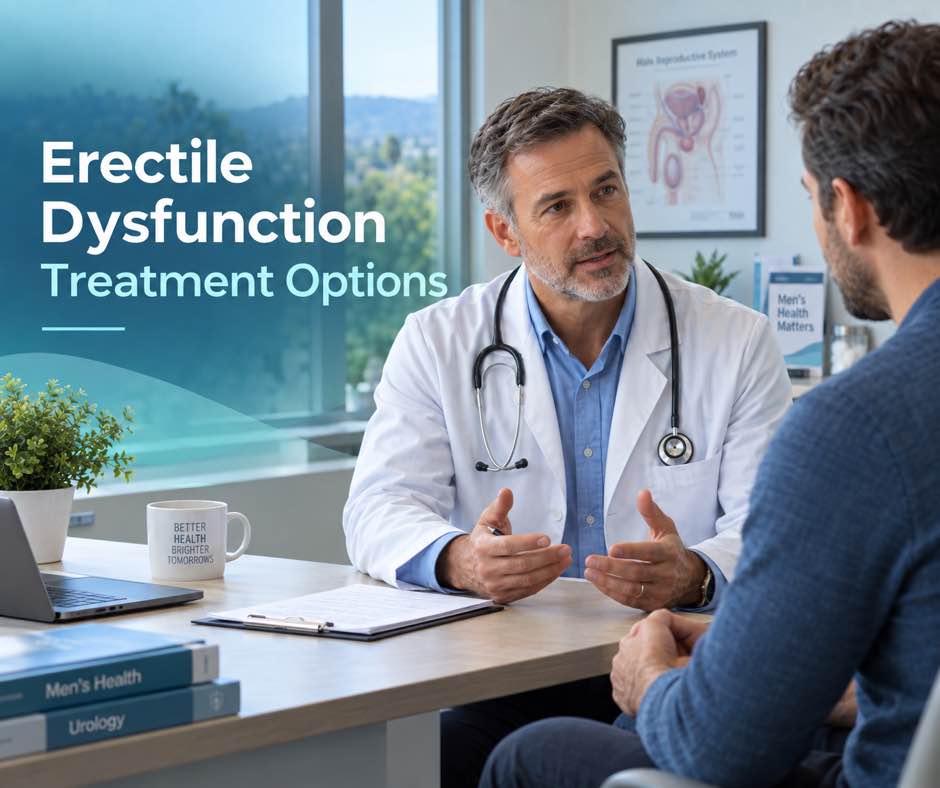
If you are looking at erectile dysfunction treatment in South Africa, the first thing worth knowing is that you have more than one option, and tablets are only part of the picture. Erectile dysfunction (ED) means struggling to get or keep an erection firm enough for sex, often enough that it bothers you. It is common. It gets more common with age. And most of the time it can be helped once a doctor works out what is actually driving it.
This guide walks through the main treatment options: the oral tablets most people have heard of, the lifestyle changes that quietly do a lot of the work, and the underlying health problems that sometimes need sorting out first. It also covers who should not take ED tablets.
Table of Contents
What erectile dysfunction actually is
An erection is a plumbing job as much as anything else. When you are aroused, blood flows into the penis and stays there under pressure. ED is when that process falls short, either the blood does not flow in properly or it does not stay. The odd off night happens to everyone, usually because of tiredness, stress or a few too many drinks. That is not a medical problem.
It becomes worth looking into when it keeps happening. If getting or keeping an erection has been a regular struggle for a few weeks or months, that is the point to talk to a doctor. It is often a useful signal about the rest of your health.
Why it happens, and why the cause matters
ED is not one condition with one cause. It usually comes from a mix of physical and psychological things. On the physical side, the common culprits are the same ones that clog up arteries everywhere else in the body: high blood pressure, high cholesterol, diabetes, smoking and being very overweight. Because the blood vessels in the penis are small, they often show trouble before the bigger vessels in the heart do.
That is the part people miss. Erectile problems can be an early warning sign of heart disease or undiagnosed diabetes, sometimes years ahead of any chest pain. Doctors take ED seriously partly for this reason.
Stress, anxiety, depression and relationship strain also play a big role, and often tangle up with the physical causes. Certain medicines can contribute too, including some for blood pressure and depression. If you want the fuller breakdown, we go into it in what causes erectile dysfunction. The short version: the cause shapes the treatment, which is why a proper assessment comes first.
Oral tablets: the PDE5 inhibitors
These are the treatments most people picture. The class is called PDE5 inhibitors, and the three you will hear about in South Africa are sildenafil (sold as Viagra and several generics such as Avigra), tadalafil (Cialis and generics) and vardenafil (discontinued in South Africa).
They all work the same way. During sexual arousal your body releases a chemical that relaxes the blood vessels in the penis. An enzyme called PDE5 then breaks that signal down. These tablets block PDE5, so the relaxation lasts longer and blood flow improves. One thing to be clear about: they do not create desire and they do not work without arousal. No sexual stimulation, no effect.
The practical differences come down to timing:
- Sildenafil usually starts working in about 30 to 60 minutes and lasts roughly 4 hours. A heavy or fatty meal can slow it down, so it works best on a fairly empty stomach.
- Vardenafil (discontinued in South Africa) behaves similarly to sildenafil, with an effect lasting around 4 hours.
- Tadalafil is the long one. Its effect can last up to about 36 hours, which is why some people call it the weekend option, and food affects it less. It also comes as a lower daily dose that some men take regularly so they do not have to plan around timing at all.
Doctors often adjust the dose or switch between them before deciding one is not working. If you want a closer side-by-side of the two most common ones, see Viagra vs Cialis in South Africa. All of them are Schedule 4, prescription-only medicines here, which we come back to below.
Lifestyle changes and treating the root cause
This is the least glamorous option and often the most useful one. Because ED and heart disease share the same risk factors, the things that protect your heart tend to help your erections too.
Stopping smoking is near the top of the list. Smoking narrows blood vessels, and that is exactly the problem. Losing extra weight, moving more, cutting back on alcohol and getting blood pressure, cholesterol and blood sugar under control all pull in the same direction. None of it is instant. But for younger men especially, and for anyone whose ED is driven mainly by lifestyle and circulation, these changes can improve things on their own or make the tablets work better.
If an underlying condition is behind the ED, treating that condition comes first and sometimes fixes the problem outright. Undiagnosed diabetes brought under control, a blood pressure medicine swapped for one that is kinder to erections, low testosterone identified and managed: these are real fixes, not just patches. A doctor can only do this if the cause has actually been looked for.
Other treatment options
Tablets do not suit everyone, and they do not always work. There are other routes, and a doctor may raise them if the oral option is not right for you:
- Vacuum erection devices. A pump draws blood into the penis, and a ring at the base holds it there. Low-tech, no medicine, and useful for men who cannot take PDE5 inhibitors.
- Alprostadil. A medicine given either as a tiny pellet inserted into the urethra or as an injection into the penis. It sounds daunting and it is very effective for many men who do not respond to tablets.
- Psychological support. When anxiety, stress or relationship problems are driving things, talking therapy or counselling can matter more than any tablet. Performance anxiety in particular feeds a nasty cycle.
- Managing medication side effects. Sometimes the answer is reviewing a current prescription that is contributing, rather than adding a new one.
Surgery, such as a penile implant, exists but sits at the far end and is rare.
Safety: who should not use ED tablets
This is the section to actually read. PDE5 inhibitors are generally safe for most healthy men, but they are prescription-only for good reasons, and there is one combination that can be life threatening.
Never take these tablets with nitrate medicines. Nitrates are used for angina and some heart conditions (names like glyceryl trinitrate, isosorbide mononitrate or dinitrate, and the GTN spray some people carry). Combined with a PDE5 inhibitor, they can cause a dangerous drop in blood pressure. The same caution applies to recreational nitrites, the poppers some people use. This is not a minor warning.
Beyond that, tablets may not be suitable, or need extra caution, if you have had a recent heart attack or stroke, have unstable angina, very low or poorly controlled blood pressure, severe liver or kidney problems, or a rare eye condition called NAION that has caused sudden vision loss. This is exactly why a doctor asks about your heart, your medicines and your history before prescribing.
Side effects to know about
Most side effects are mild and pass as the medicine wears off. The common ones are headache, facial flushing, a blocked or runny nose and indigestion. Tadalafil can also cause back or muscle aches. Some people notice a mild, temporary blue tinge to their vision on sildenafil. Annoying, not dangerous, and it settles on its own.
The one that is a genuine emergency is priapism: an erection that will not go down, usually painful, lasting more than about four hours. It is rare, but if it happens you need to get to a hospital, because an erection left that long can cause lasting damage. Sudden loss of vision or hearing is also rare but a reason to stop and seek help straight away.
How to get erectile dysfunction treatment in South Africa
Sildenafil, tadalafil and vardenafil(discontinued in South Africa) are Schedule 4 medicines in South Africa. That means prescription-only. You cannot legally get them off a shelf, and the pop-up sites selling unbranded blue pills with no questions asked are a genuine risk, both for what is actually in the packet and for skipping the safety checks that exist to protect your heart.
The proper route is a consultation with a doctor who can take your history, check for the underlying causes worth ruling out, confirm nothing you take clashes with these medicines, and decide whether a treatment is appropriate. If this treatment could be right for you, you can start a consultation here. An HPCSA-registered doctor will review your history and health, and if it is clinically appropriate, a prescription can be issued.
FAQ
What is the most common treatment for erectile dysfunction in South Africa?
Oral PDE5 inhibitor tablets, mainly sildenafil and tadalafil, are the usual first-line treatment. They are prescription-only here, and a doctor decides whether they suit you and at what dose.
Can I get ED tablets without a prescription in South Africa?
No. Sildenafil, tadalafil and vardenafil(discontinued in South Africa) are Schedule 4 medicines, so a prescription from a doctor is required by law. Sites selling them with no consultation are operating outside the rules and skip the safety checks that keep you safe.
Do erectile dysfunction tablets work straight away?
Not instantly, and not for everyone on the first try. Most start working within 30 to 60 minutes, and they only work with sexual arousal. Doctors sometimes adjust the dose or try a different tablet before deciding.
Can I treat ED without medication?
Often, yes, especially when lifestyle and circulation are the main drivers. Stopping smoking, losing weight, exercising and controlling blood pressure and blood sugar can improve erections on their own or make treatment more effective. Counselling helps when anxiety or stress is involved.
Is erectile dysfunction a sign of something more serious?
It can be. ED is sometimes an early sign of heart disease, high blood pressure or undiagnosed diabetes, because the small blood vessels in the penis show trouble first. This is a big reason to get properly assessed rather than only chasing a tablet.
Why can’t I take ED tablets with heart medication?
The dangerous clash is with nitrate medicines used for angina and some heart conditions. Together with a PDE5 inhibitor they can drop your blood pressure to a dangerous level. Always tell the doctor every medicine you take before starting.
Which lasts longer, sildenafil or tadalafil?
Tadalafil lasts far longer, up to about 36 hours, versus roughly 4 hours for sildenafil. Tadalafil also comes as a low daily dose. Which suits you depends on your health and how you would actually use it, which is a conversation to have with a doctor.
Medically reviewed by a South African HPCSA-registered medical practitioner. Last reviewed: August 2026.
This article is general health information, not medical advice or a prescription. ED medicines are prescription-only; a prescription requires a consultation and clinical assessment. Do not use ED medicines with nitrate heart medication. Speak to a doctor about what is appropriate for you.
Sources: NHS inform: Erectile dysfunction, SAHPRA: Sexual dysfunction enhancers, PDE5 inhibitors: pharmacology and clinical applications (PMC), Mayo Clinic: Erectile dysfunction, a sign of heart disease?
