


Thrush vs BV: How to Tell the Difference
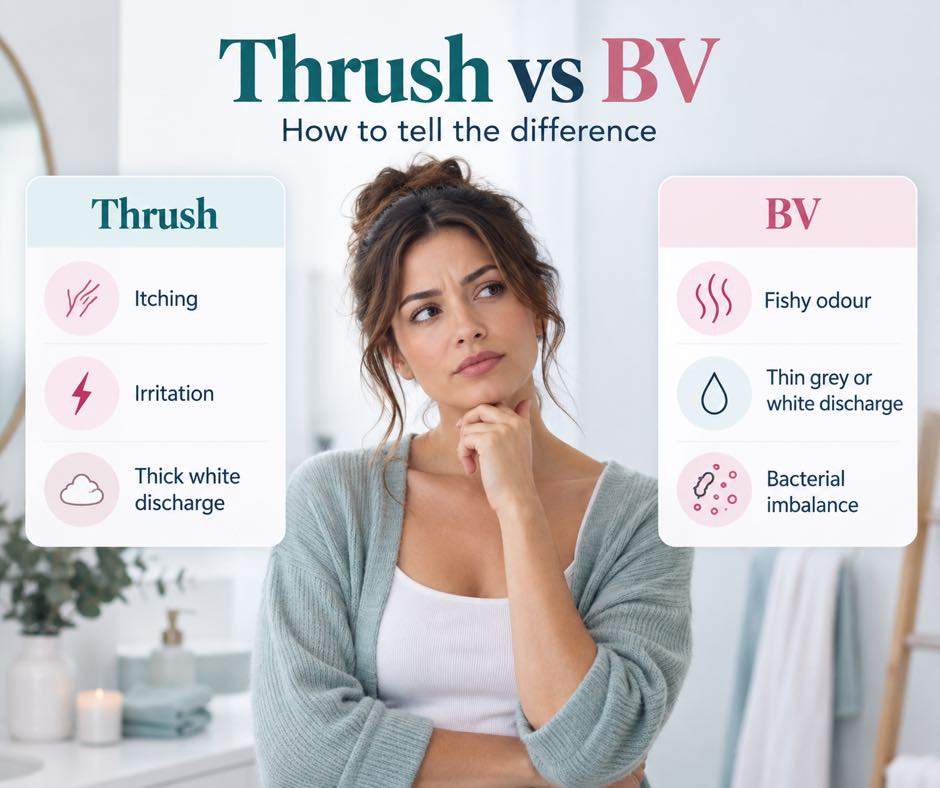
Changes in vaginal discharge, itching or an unusual smell are common reasons for women to wonder whether they have thrush or bacterial vaginosis.
Thrush and bacterial vaginosis, usually shortened to BV, are two of the most common causes of vaginal symptoms. They can sometimes feel similar, but they have different causes and require different treatments.
One of the biggest mistakes is assuming that every vaginal discharge is thrush. Using an antifungal treatment when BV is actually causing the symptoms will not treat the problem.
Table of Contents
Thrush vs BV at a glance
| Thrush | Bacterial vaginosis | |
|---|---|---|
| Cause | Overgrowth of Candida yeast | Imbalance of vaginal bacteria |
| Discharge | Often thick and white | Usually thin, grey or white |
| Smell | Usually little or no smell | Often a noticeable fishy smell |
| Itching | Very common | Usually absent or mild |
| Redness and irritation | Common | Less common |
| Pain or stinging when urinating | Can occur | Can sometimes occur |
| Treatment | Antifungal medicine | Antibiotic medicine |
| Is it an STI? | No | No, although sexual activity can influence BV |
These are typical patterns rather than strict rules. Symptoms can overlap, which is why testing may be useful when the diagnosis is uncertain.
What is vaginal thrush?
Vaginal thrush is a yeast infection, usually caused by a type of yeast called Candida albicans. Candida can normally live in the vagina without causing any problems. Thrush develops when Candida grows more than usual and begins causing inflammation and symptoms.
Around three quarters of women will experience vaginal candidiasis at least once during their lives. Some women experience repeated episodes.
What does thrush feel like?
The most typical symptom of thrush is itching.
The vulva may feel irritated, swollen, tender or sore. Some women experience burning or stinging, particularly during urination or sex.
Discharge is often described as thick and white, sometimes with a cottage cheese appearance. However, thrush does not always produce this classic type of discharge. A strong smell is not typical.
Common thrush symptoms include:
- Itching around the vagina and vulva
- Redness or irritation
- Vaginal soreness
- Thick white discharge
- Burning or discomfort when urinating
- Pain or discomfort during sex
- Swelling around the vulva
The combination of significant itching with a thick white discharge and little or no odour makes thrush more likely.
What causes thrush?
Sometimes there is no obvious reason. Certain factors can make Candida more likely to overgrow, including recent antibiotic use, pregnancy, diabetes and conditions or medications that affect the immune system.
Antibiotics can sometimes trigger thrush because they alter the normal bacteria that help maintain the vaginal environment.
Thrush is not normally considered a sexually transmitted infection. Sexual activity can occasionally trigger symptoms, but uncomplicated vaginal thrush is not usually acquired through sex and partners do not routinely need treatment.
What is bacterial vaginosis?
Bacterial vaginosis happens when the normal balance of bacteria inside the vagina changes. The vagina naturally contains many types of bacteria. In BV, certain bacteria become more abundant while protective bacteria decrease.
Unlike thrush, BV is not caused by a fungus. BV is extremely common and many women who have it do not experience any symptoms at all.
What does BV feel like?
The most recognisable symptom of BV is often a fishy vaginal smell.
The smell may be particularly noticeable after sex or around menstruation. Discharge is usually thinner than the discharge associated with thrush. It may appear white, grey or slightly off white. BV typically does not cause the intense itching and inflammation associated with thrush.
Common BV symptoms include:
- Thin vaginal discharge
- Grey or white discharge
- A noticeable fishy smell
- A smell that may become stronger after sex
- Occasionally mild irritation or burning
Some women have BV without experiencing any symptoms.
The easiest way to remember the difference
A simple way of thinking about the typical symptoms is:
Thrush usually itches. BV usually smells.
If there is intense itching, redness and thick white discharge with little smell, thrush becomes more likely. If there is a thin discharge with a noticeable fishy smell and relatively little itching, BV becomes more likely. It is a useful guide, but it is not a diagnosis. Other vaginal infections can produce very similar symptoms.
Is BV an STI?
BV is not usually classified as a sexually transmitted infection.
However, sexual activity can influence the vaginal bacterial environment. BV is associated with factors including having a new sexual partner or multiple partners, and it can occur in women who have sex with women.
Douching can also increase the risk of disrupting the normal vaginal bacterial balance. Having BV can also increase susceptibility to certain sexually transmitted infections.
This is one reason why a sexual health assessment may sometimes be recommended when someone presents with vaginal discharge.
Can you have thrush and BV at the same time?
It is possible to have more than one cause of vaginal symptoms at the same time. For example, someone may have Candida together with bacterial vaginosis, or symptoms may actually be caused by another infection altogether.
This becomes particularly relevant when symptoms do not fit neatly into the usual pattern. For example, thick discharge together with a strong smell, or persistent symptoms despite appropriate treatment, may warrant further investigation rather than repeatedly treating the same suspected condition.
What else can look like thrush or BV?
Not every vaginal discharge is caused by thrush or BV.
Other possibilities include:
- Trichomoniasis
- Chlamydia
- Gonorrhoea
- Genital herpes
- Cervical infections
- Irritation from soaps or vaginal products
- Allergic reactions
- Hormonal changes
- Certain skin conditions affecting the vulva
Examination and testing can sometimes be necessary.
How is thrush treated?
Thrush is treated with antifungal medication.
Depending on the circumstances, treatment may include an antifungal vaginal cream, a vaginal pessary or an oral antifungal medicine.
Common antifungal medicines include clotrimazole and fluconazole. Most uncomplicated Candida infections respond well to appropriate antifungal treatment. Treatment can be different for severe infections, pregnancy or recurrent thrush, so repeatedly treating yourself without confirming the diagnosis is not always appropriate.
How is BV treated?
BV is treated with antibiotics.
Commonly used treatments include metronidazole or clindamycin. These may be given as tablets or vaginal preparations depending on the treatment selected. This difference in treatment is important.
An antifungal treatment used for thrush will not treat BV, while an antibiotic intended for BV will not treat a Candida infection.
Why does BV keep coming back?
Unfortunately, recurrence is common. Some women find that symptoms disappear after treatment and then return several weeks or months later.
This does not necessarily mean that the initial treatment failed. The vaginal bacterial environment can change again after treatment.
Repeated BV may require a different treatment approach and should ideally be discussed with a healthcare professional.
Why does thrush keep coming back?
Occasional thrush is extremely common. Repeated infections are different.
Recurrent vaginal candidiasis is generally defined as multiple symptomatic episodes within a year. Frequent episodes may warrant further testing to confirm that Candida is actually responsible and to determine which Candida species is present.
Certain less common Candida species can be more difficult to treat with standard antifungal medicines. Conditions such as poorly controlled diabetes, immune problems and repeated antibiotic exposure may also contribute in some patients.
Should you use probiotics?
Probiotics are often marketed for vaginal health. Although the vaginal microbiome is an important area of research, probiotics should not be relied upon as a replacement for appropriate treatment of confirmed thrush or BV.
If symptoms are present, establishing what is actually causing them is more useful than trying multiple supplements or vaginal products.
Should you douche or clean inside the vagina?
The vagina does not need to be cleaned internally. Douching and the use of fragranced products inside the vagina can interfere with the natural vaginal environment and may increase the likelihood of BV.
Gentle washing of the external vulval area is generally sufficient. Avoid inserting soaps, shower gels, deodorants or other cleansing products inside the vagina.
What if you are pregnant?
Vaginal symptoms during pregnancy should be discussed with a healthcare professional before treatment.
BV during pregnancy is particularly worth identifying because symptomatic BV has been associated with pregnancy complications including premature delivery and low birth weight.
Pregnancy also changes which thrush treatments are preferred. Do not assume that a medication you have previously used for thrush is automatically suitable during pregnancy.
When should you see a doctor?
Consider getting assessed if:
- This is your first episode of vaginal symptoms
- You are not sure whether you have thrush or BV
- There is a strong or unusual vaginal smell
- Symptoms continue despite treatment
- Symptoms repeatedly return
- You are pregnant
- You have diabetes or a weakened immune system
- There is significant pain
- You have pelvic or lower abdominal pain
- There is abnormal vaginal bleeding
- You have sores, ulcers or blisters
- You have had a new sexual partner or possible STI exposure
- You develop fever or feel significantly unwell
A green, yellow or frothy discharge, pelvic pain, bleeding between periods, genital ulcers or significant pain should not simply be assumed to be thrush or BV.
If the symptoms are unusual, keep returning, do not respond to treatment or are associated with pain, bleeding or possible STI exposure, it is better to establish the cause rather than repeatedly treating presumed thrush.
This article is for general educational purposes and is not a substitute for individual medical advice, examination or testing.
